
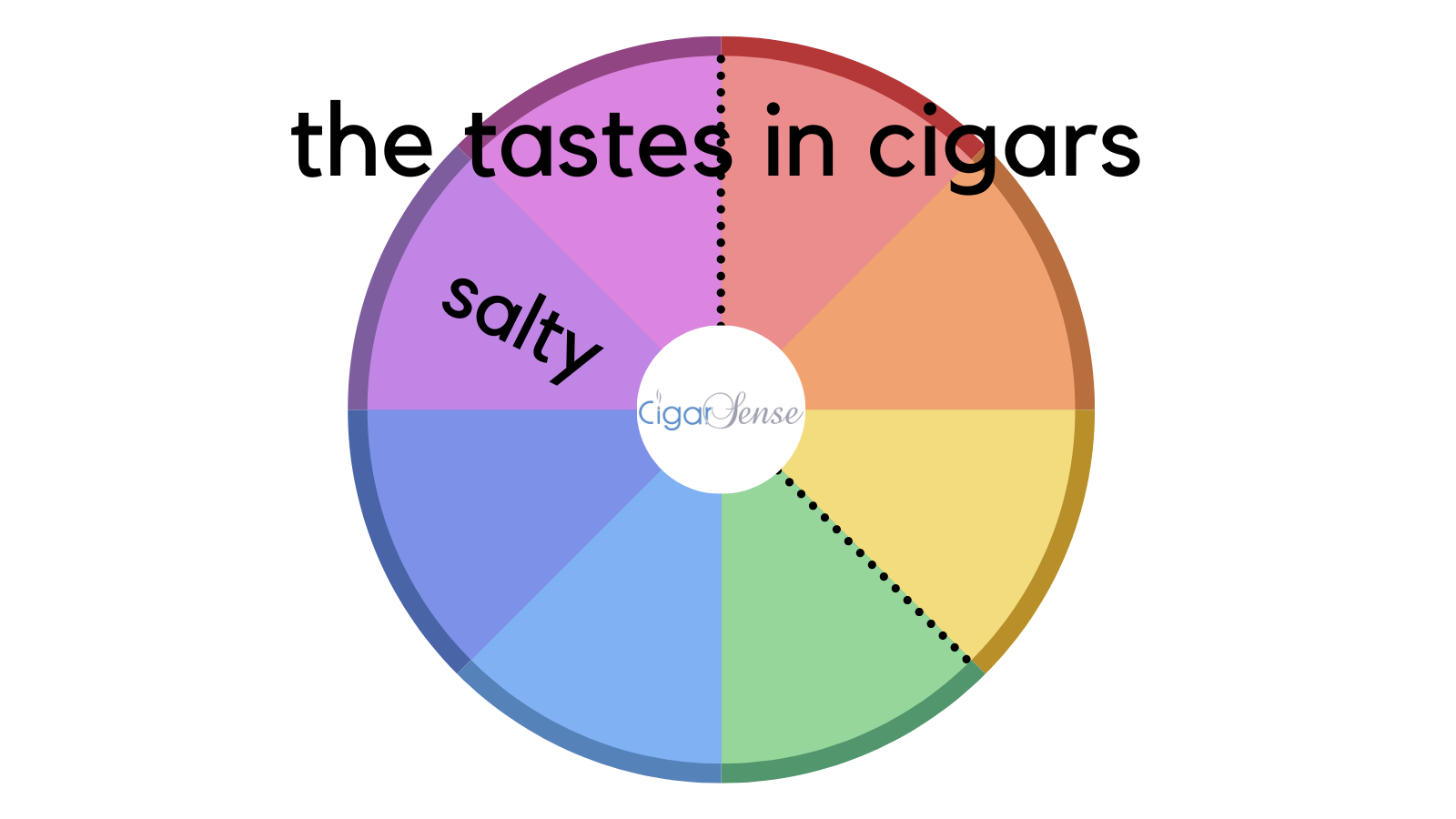
Have you ever had a cigar that tasted “salty”? It may not be the most commonly identified flavor, but it can often be found in cigars, working in synergy with other tastes and sensations.
The salty taste, like sweet, bitter, sour, savory (umami), and the very recently discovered oleogustus (fat), is a basic taste.
But how does the salty taste get into cigars?
It’s not just the soil components that contribute to the flavor; a cigar’s taste comes from a multitude of factors, including the tobacco seed, climate, fertilizers, growing processes, curing, fermentation, blending recipe, rolling, aging… All these elements interact with one another and may generate sensations you may not expect. This depends, for example, on the concentration of molecules, or on the molecular weight.
How do we perceive the salty taste?
Perceiving the salty taste is not a magic trick, but rather a result of our sensitivity, threshold levels and of our awareness of biases affecting our judgement.
We have many receptors for the salty taste in the papillae on our whole tongue, and – depending on the property concentration and on our threshold – we are able to detect this taste. Remember, the salty taste is not only sensed on the front sides of the tongue, as the debunked tongue myth used to say.
As mentioned above, salty is rarely perceived alone in a cigar, rather in a dance of multiple molecules that affect one another and, as a result, will deliver many different flavors at the same time as the nicotine sensation and the harshness of the smoke.
How do I know that a cigar has salty taste?
Perceiving the salty taste is not a magic trick, but rather a result of our sensitivity and threshold levels. We have many receptors for the salty taste on our tongue, and depending on the concentration of the salt and our individual threshold, we can detect it before or after other tastes.
Salty is not just a more intense savory (umami) taste. The molecules that generate them are different.
However, salty is rarely perceived alone in a cigar. It is often part of a complex interplay of molecules that deliver multiple flavors at the same time.
At Cigar Sense, we train our sensory tasters to recognize all descriptors and work hard to develop their awareness of biases. In the particular case of the salty taste threshold measurement, we provide them with simple tests based on sodium chloride, diluted in water according to ISO norms.
Saltiness, unless excessive, is not typically an off-flavor in cigars, therefore personal preference does play a role. Some may not enjoy a cigar with saltiness, even if it is perfectly balanced with other descriptors. Although you might say you never came across a salty cigar, an intense salty taste is found in approximately 2% of the premium cigars, whereas 22% present a moderate intensity of salty taste.
Some practical tips
If you’re curious about training your palate to recognize the salty taste, A Cigar Tasting Course is an excellent resource because it’s science backed.
For the seekers among you, here you can find the cigars that present saltiness, so you know whether to ask for similar cigars in flavor or not.
A few exercises:
- how to differentiate aromas from tastes (student access required)
- how to differentiate different tastes (student access required)
You can also easily find the cigars that present the appropriate level of saltiness, in balance with other sensory perceptions, and identify the ones that match your preference for saltiness and many other sensory characteristics. Here is the link to personalized recommendations and other educational resources: log-in or sign-up for free.